

Colombia Housing Crisis: Camacol’s Warning
Colombia housing crisis: what Camacol’s warning, VIS cancellations, and reactivation proposal mean for Coffee Region families.
By Andres5 min read
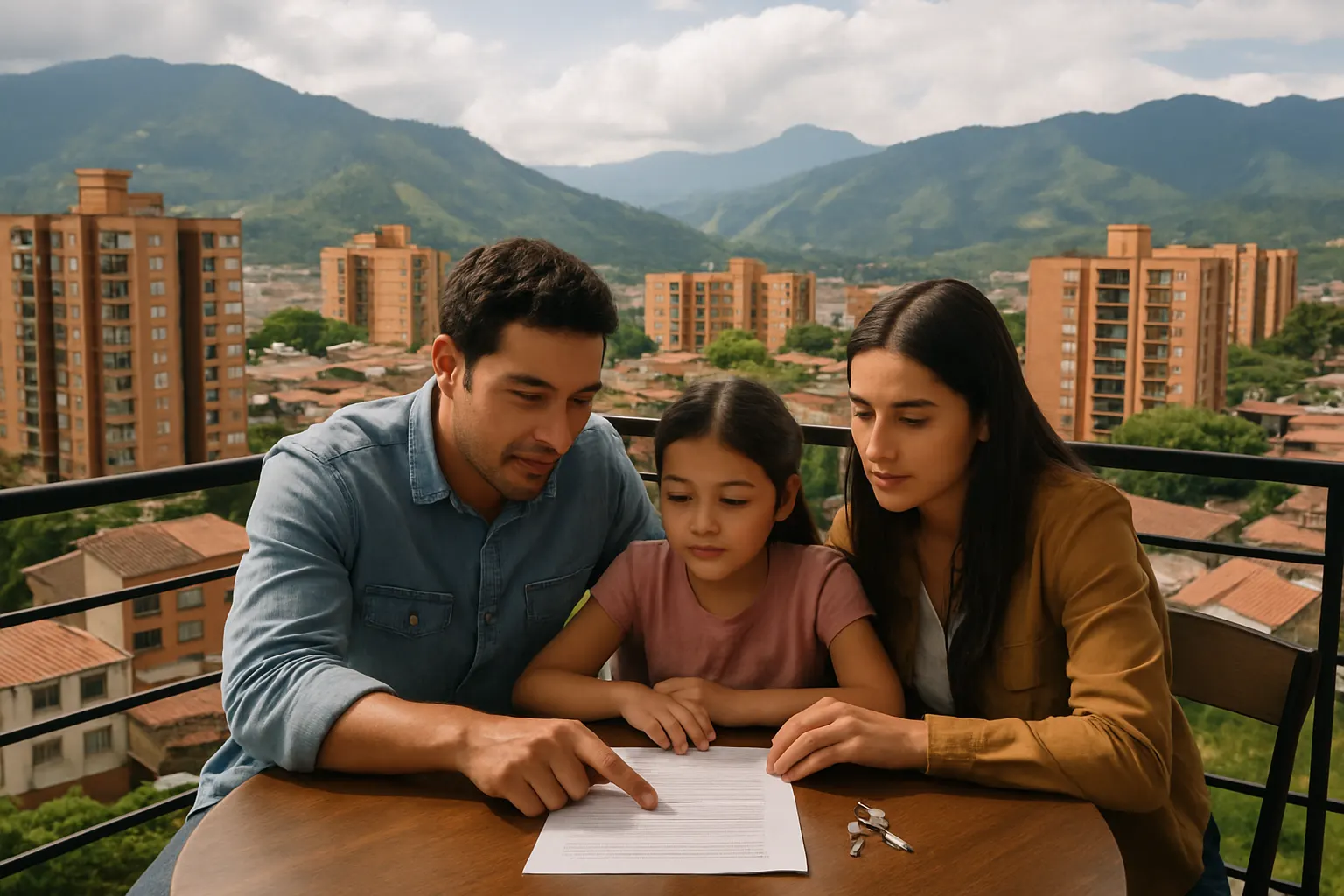
The Colombia housing crisis returned to the public agenda this week after Camacol warned of a major setback in the sector and proposed a plan to reactivate housing projects across the country. For families considering a purchase in Armenia, Pereira, or the Coffee Region, this is not a distant issue: it may affect available supply, decision timelines, and how households evaluate subsidies and financing.
According to headlines published by Portafolio, 360 Radio, and IFM Noticias, Camacol has emphasized three points: housing construction is facing a deep slowdown, there is a large pipeline of projects ready to move forward, and subsidies remain essential to support home purchases, especially in the VIS segment.
Colombia housing crisis: what Camacol is warning about
According to 360 Radio, Camacol warned that housing construction in Colombia has fallen back 15 years. That statement reflects the association’s concern about the loss of momentum in a sector linked to jobs, materials, financing, and long-term family decisions. It is not only about fewer home sales: when construction slows, projects may be postponed, launches may be reviewed, and new supply may reach the market more slowly.
Portafolio reported that builders have 1,424 housing projects ready, worth $98 trillion, and that Camacol called for not giving up on subsidies. IFM Noticias also reported that the association proposed executing $98 trillion in housing to reactivate construction. For households, the message is clear: the sector is pushing to move projects that are already prepared, but execution depends on families being able to buy and close transactions.
360 Radio also reported that Camacol’s plan aims to promote 257,000 homes. That figure shows the scale of the proposal: this is not a small or isolated measure, but an attempt to reactivate an entire chain. If reactivation moves forward, it could help maintain or expand future supply; if it does not, some families may find fewer new options in certain segments and locations.
VIS cancellations and subsidies: why they matter for families
One of the most sensitive figures was reported by 360 Radio: more than 120,000 families withdrew from VIS home purchases over the past four years, according to Camacol’s president. In practice, a withdrawal may happen when a family cannot meet the conditions to close, their financial situation changes, they do not obtain the expected financing, or the process is no longer viable. Each case is different, but the combined effect affects buyers, builders, and the pace of projects.
For families looking for VIS housing, this is especially important because many purchase plans depend on combining savings, credit, and subsidies. According to Portafolio, Camacol urged the country not to abandon subsidies. While each program has its own requirements and availability, the association’s message is that these supports remain relevant for more households to buy and for projects to secure actual buyers.
This does not mean families should rush into a purchase. It means they should carefully review whether they meet the conditions, whether their financing approval is valid, whether the project shows clear progress, and whether closing the deal is realistic. In VIS housing, delays or missing documents can affect the possibility of using a subsidy or keeping a unit reservation. That is why it helps to organize information before falling in love with a property: income, payment capacity, available savings, and financing options.
It is also important to understand that subsidies do not replace a responsible financial decision. They help complete the purchase, but the family still takes on a long-term commitment. In uncertain market conditions, comparing options, asking about project stages, and calmly reviewing commercial documents becomes more important than ever.
What could happen to housing supply in Armenia and Pereira
Although the cited news refers to the national outlook, its effects may be felt in regional markets such as Armenia, Pereira, and other Coffee Region municipalities. If construction slows, new supply may take longer to arrive or become concentrated in projects with stronger commercial progress. For buyers, this may mean less variety in certain locations, home types, or price ranges.
For sellers of existing homes, a slower new-housing market may have mixed effects. Some families that do not find a suitable new project may consider resale properties; at the same time, if buyers are more cautious or face financing difficulties, sale timelines may lengthen. The key is to enter the market with a well-supported price, complete documentation, and a realistic strategy.
In rentals, the impact is not always immediate, but there is an underlying connection: when more households postpone buying, part of that demand remains in the rental market for longer. This can increase interest in well-located, well-maintained properties, especially in mid-sized cities with students, workers, and families moving within the region. Still, each neighborhood and property type behaves differently.
For investors, Camacol’s warning calls for more analysis and less impulse. The news should not be read as a reason to freeze, but as a signal to study supply, demand, and the risks of each transaction more carefully. In real estate, location, liquidity, legal status, and asset quality matter as much as the broader market context.
For families in Quindío and the Coffee Region, the housing reactivation debate is not abstract. It may influence which projects move forward, how many VIS options remain available, how quickly units sell, and what alternatives are left for those who cannot buy immediately. The practical recommendation is to prepare: review purchasing capacity, organize documents, compare new and existing homes, and avoid depending on a single scenario.
In Armenia, Pereira, and nearby municipalities, making a good real estate decision requires reading the moment without panic, but with solid information. If Camacol’s proposed reactivation advances, the supply outlook could improve; if the slowdown continues, families will need to be more strategic when buying, selling, or renting.
Sources: IFM Noticias, «Camacol propuso ejecutar $98 billones en vivienda para reactivar la construcción» · 360 Radio, «Más de 120.000 familias desistieron de comprar vivienda VIS en los últimos cuatro años, presidente de Camacol» · 360 Radio, «Reactivar la construcción: el plan de Camacol para impulsar 257.000 viviendas» · Portafolio.co, «Constructores tienen listos 1.424 proyectos de vivienda por $98 billones; Camacol pide no renunciar a los subsidios» · 360 Radio, «Construcción de vivienda en Colombia retrocede 15 años, advierte Camacol»
Keep reading
 Guides
Homes at Risk From Rain in Colombia’s Coffee Region
Homes at risk from rain in Colombia’s Coffee Region: what to check in the area, structure, and documents before buying or renting.
· 5 min read
 Guides
Mortgage Loan or Housing Leasing in Colombia
Guide to compare mortgage loans or housing leasing in Colombia, review subsidies, and prepare for a home purchase in the Coffee Region.
· 5 min read
 News
Central Bank Interest Rate and Buying a Home in Colombia
Colombia’s central bank rate remains at 12.25%. Learn what it may mean for mortgages, buying power, and home decisions in the Coffee Region.
· 5 min read